A Midwinter Visit Planned Around Daylight
Plan a midwinter visit around daylight with one manageable destination, a warm pause and time to notice the season without hurrying home in the dark.
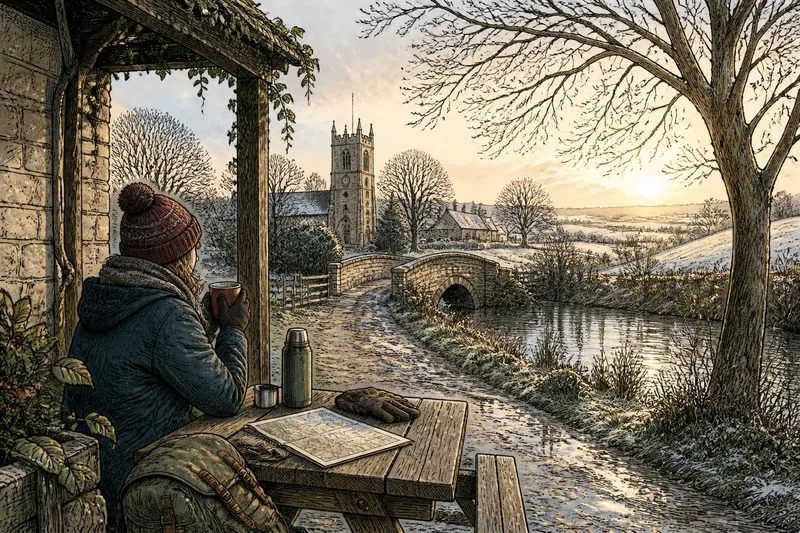
How do you plan a midwinter visit around daylight without turning it into a race home? Choose one destination, allow time for a warm pause and set a clear point to turn back. A modest plan leaves room to notice the season instead of watching the clock.
Choose a destination that suits the light
Look for a place where daylight adds something to the visit: a riverside path, churchyard, village green, woodland edge or lane with a view across fields. The best choice need not be the grandest. Pick somewhere you can reach without a complicated journey and leave easily if the weather turns.
Check the route on a paper map or an app such as OS Maps, and note where the path meets a road or a familiar landmark. A short circular route returns you to the starting point; an out-and-back walk lets you turn round at any time. If you are travelling by bus, check the return service before setting off.
Say you are leaving from a village hall to visit a footbridge beside a stream. You choose the direct lane, cross only if the path is open, then return the same way to the hall. The clear destination and route home mean that a slow start or a change in weather need not turn the outing into a race.
Set a return point before you leave
Midwinter light changes the feel of a familiar route, and cloud can make the afternoon seem to close early. Rather than guessing exactly when you will be back, choose a practical turning point: after reaching a bench, when the church clock chimes, or as the sky begins to dim behind the trees.
Keep the plan flexible. If you arrive later than expected, shorten the walk rather than dropping the warm pause or hurrying along unfamiliar ground. A torch is useful in a pocket, but plan to finish in daylight rather than treating it as a substitute for a manageable return.
If you are going alone, tell someone your broad route, particularly if it passes through isolated countryside. Keep your phone charged and easy to reach, and use a map and visible landmarks for ordinary route choices. On muddy or uneven paths, sturdy footwear and a slower pace are more useful than trying to cover extra ground.
Make room for a warm pause
A warm stop gives the outing a natural middle: arrive, sit or stand somewhere sheltered, then decide whether there is time and energy to continue. A village café, a pub serving lunch, a community shop with seating or a covered bus shelter may suit, depending on what is open and welcoming.
Check opening times before setting out, since winter hours may differ from those you remember. If no indoor place is available, bring a flask of tea, coffee or soup and choose a sheltered spot that does not block a gate, path or roadside entrance. A sandwich or piece of cake can make the pause feel deliberate without elaborate preparation.
Dress for sitting still as well as walking. A windproof outer layer, gloves and a warm hat can make a brief stop more comfortable; an extra layer in a rucksack is useful if the temperature drops. Take litter home, including tea bags and wrappers, and keep your flask and bag away from livestock and wildlife.
Notice what the season has changed
Winter is easier to notice when you pause for one detail instead of trying to take in everything. Look for a building revealed by bare branches, water gathered along a track or low sunlight catching a hedge. Such details give a familiar route its own character.
Choose one thing to look for before leaving home. You might listen for birds in a sheltered garden, notice the sound of a stream after rain or see which lanes hold the last light. A few words in a notebook or a single photograph can help you remember the view without turning the walk into a series of stops.
Stay on permitted paths, close gates behind you when appropriate and give animals space. A frosty verge or muddy field edge may look inviting, but the marked route is usually better for protecting the ground and keeping your footing secure.
Keep the plan easy to share
A midwinter visit can become a household or village custom when it is simple enough to repeat. Invite someone to meet at a recognisable place, such as the post box, village green or entrance to a public footpath. Agree on a destination and warm stop in advance, while leaving room for conversation and a change of pace.
For a mixed-age group, choose a route with somewhere to sit and an easy option to head back early. If someone uses a mobility aid or has limited stamina, check the surface and access rather than assuming a familiar path will suit winter conditions. A short visit to a sheltered viewpoint may be more enjoyable than a longer walk that leaves someone struggling to keep up.
Keep the shared plan small: one meeting place, one destination and one pause. That makes the outing easier to adapt if a bus is late, a café is closed or the weather shifts. The point is to spend time together in the available light, not to complete a route at all costs.
What should a midwinter visit include?
How do I choose a route for a short daylight window?
Pick a familiar, permitted route with an obvious destination and a simple return. Check the path and transport arrangements beforehand, then leave room to turn back early.
What should I take on a winter outing?
Wear warm layers, suitable footwear and clothing that suits the forecast. Carry water or a hot drink, a charged phone and a map or route information. Add a small torch for an unexpected delay, not as a reason to plan a late finish.
What if the café or shelter is closed?
Have an alternative ready, such as a flask and a sheltered place where you can pause without obstructing anyone. If there is no comfortable or suitable stop, shorten the outing and return home for a warm drink.
How can I make the outing accessible to others?
Ask what route length, surface and seating will work for the people coming, then check those details before choosing the destination. Offer an easy early return and avoid expecting the group to keep pace with the quickest walker.
Leave enough time for the way back
Allow breathing room between the warm pause and the journey home. A conversation can run on or a slippery patch can slow the walk without forcing you to rush through the final stretch. That buffer helps the outing feel like a visit rather than an errand squeezed between other plans.
When you get home, note what would make the next midwinter visit easier: a better meeting point, a more sheltered destination or a café with dependable winter hours. Keep the observation practical and brief. A midwinter visit planned around daylight works best when it is easy to adjust, with one place to reach, one warm pause and enough time to return calmly.
The useful question is not how much countryside you can cover, but what you can notice without rushing. Choose a destination that earns the journey, leave room for warmth and conversation, and let the return time set the scale of the day.